The Happy Path Isn't the Real Work
At the beginning of a project, the process usually sounds straightforward.
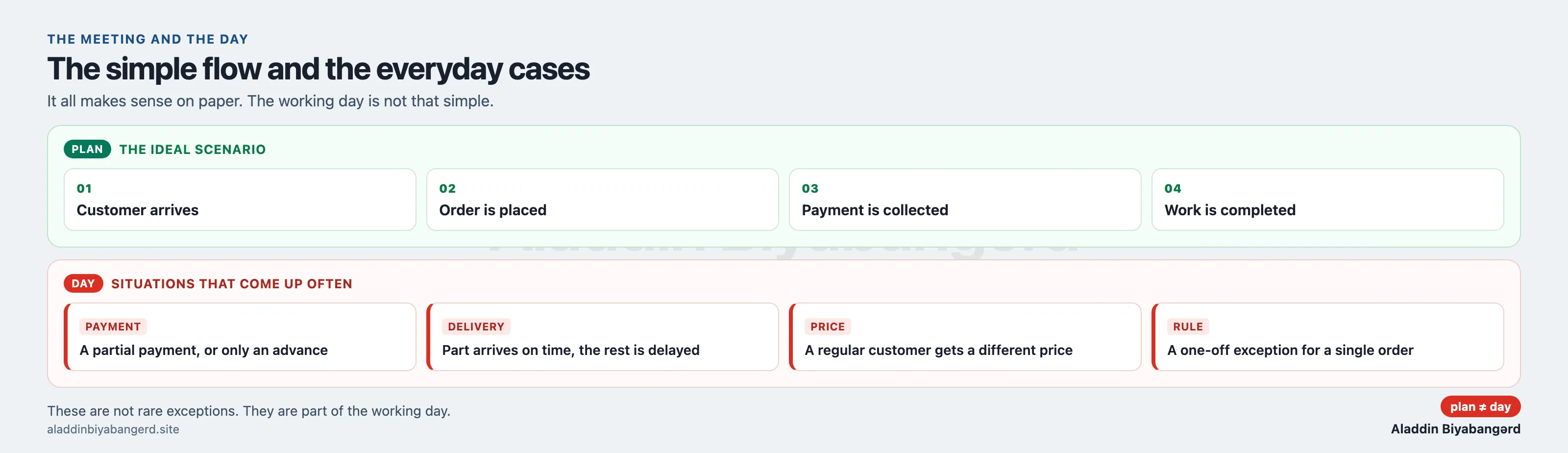
A customer arrives. An order is created. Payment is collected. The job is completed.
It all makes sense on paper. But that's not how every working day unfolds.
A customer might pay only part of the amount. Some items arrive on time while the rest are delayed. A regular customer gets a different price. A manager makes a one-off exception to the usual rules. Sometimes, incorrect data needs to be fixed without losing the history of what happened before.
These aren't unusual edge cases that happen once in a blue moon. They're part of running a business.
Yet in early project meetings, these details often go unmentioned. The discussion focuses on the scenario where everything goes according to plan, while the rest gets pushed to a later stage.
That's where the problem begins.
Where does the problem start?
Often, the problem doesn't begin with the code. It begins with how the process is described.
The team defines the main scenario and labels everything else an exception. It sounds harmless, as if these situations are rare and can be added later if needed.
But in day-to-day operations, these are often the very situations that consume a significant amount of time and attention.
When the system doesn't account for them, people find workarounds. They leave comments, send separate messages, or record figures somewhere else. Sometimes, they simply move on and leave the issue for someone to fix later.
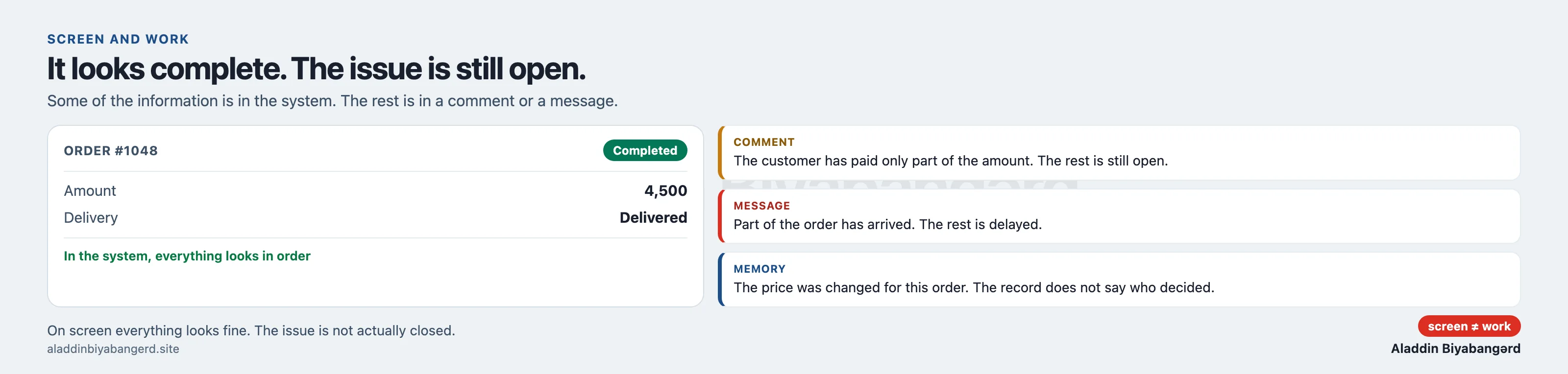
On screen, everything looks complete. In reality, the work isn't finished.
Some information is in the system, some is buried in a conversation, and the final decision may exist only in someone's memory. When someone needs to understand what happened later, they end up searching through messages and notes instead of relying on the system.
When does an exception stop being an exception?
I wouldn't classify something as an exception simply because it differs from the main workflow.
If it happens regularly and someone has to make a decision every time, it deserves to be treated as part of the process.
For example:
- A customer hasn't paid the full amount, but work can still begin.
- Part of an order has been delivered, while the rest is still on its way.
- A customer receives a price that differs from the standard rate.
- Incorrect data needs to be corrected without losing the history of previous transactions.
- A manager changes a rule for a specific case, and someone needs to know later who made that decision.
Each situation might seem like a small detail on its own. Together, they describe how the business actually operates.
If these situations aren't accounted for, the software reflects how we think the business should work, rather than how it really works.
What should be clarified before building the system?
Defining the main workflow is important. Without it, it's difficult to understand the process and its boundaries.
But that's only the starting point. The situations that come up in everyday operations need to be discussed as well.
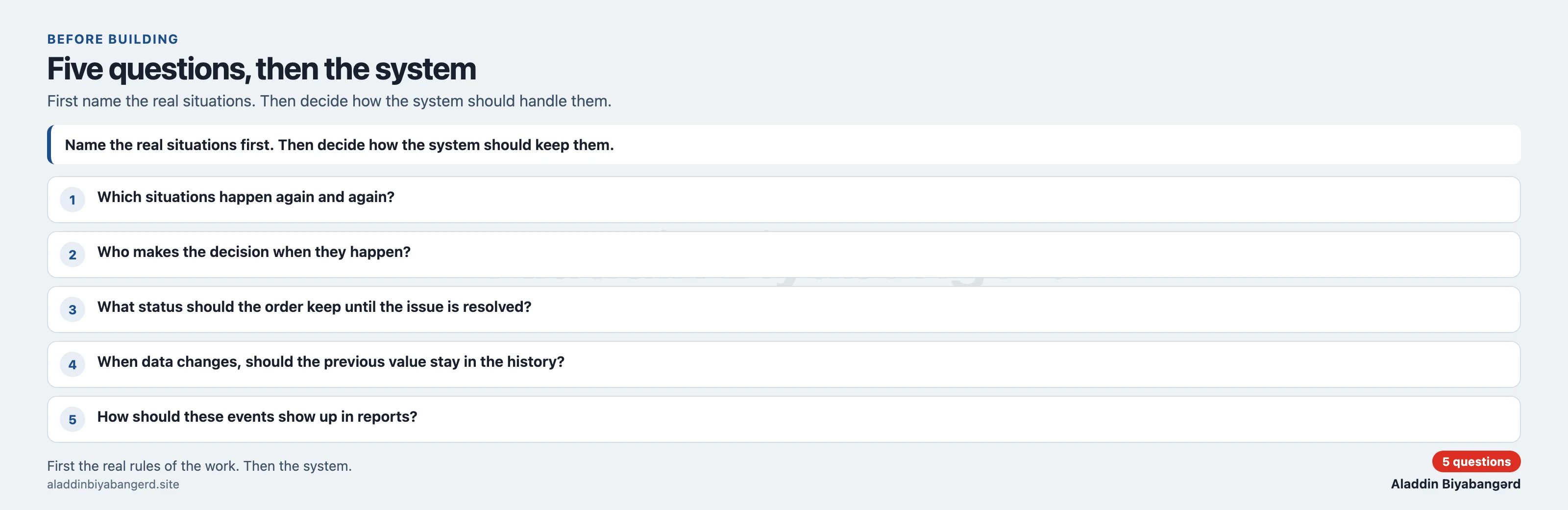
A few questions can help:
- Which situations occur repeatedly?
- Who makes the decision when they happen?
- What status should an order or transaction have while an issue remains unresolved?
- When data changes, should the previous value remain in the history?
- How should these events appear in reports?
Answering these questions may increase the scope of development. Additional statuses, new business rules, or more handling logic might be necessary.
That's not a problem in itself.
In fact, defining these rules early helps prevent confusion later. Every situation the system cannot handle can eventually become a problem someone has to resolve manually.
The takeaway
It's easy to explain a process in a meeting. The real challenges begin when things don't go according to plan.
A good system must account not only for situations where everything works as expected, but also for how the business handles everyday problems.
First, understand the actual rules of the business. Then build the system around them.
Because real business operations are never limited to the happy path.